Spanish Fried Patatas Bravas with Smoky Paprika Sauce

Jump to Recipe
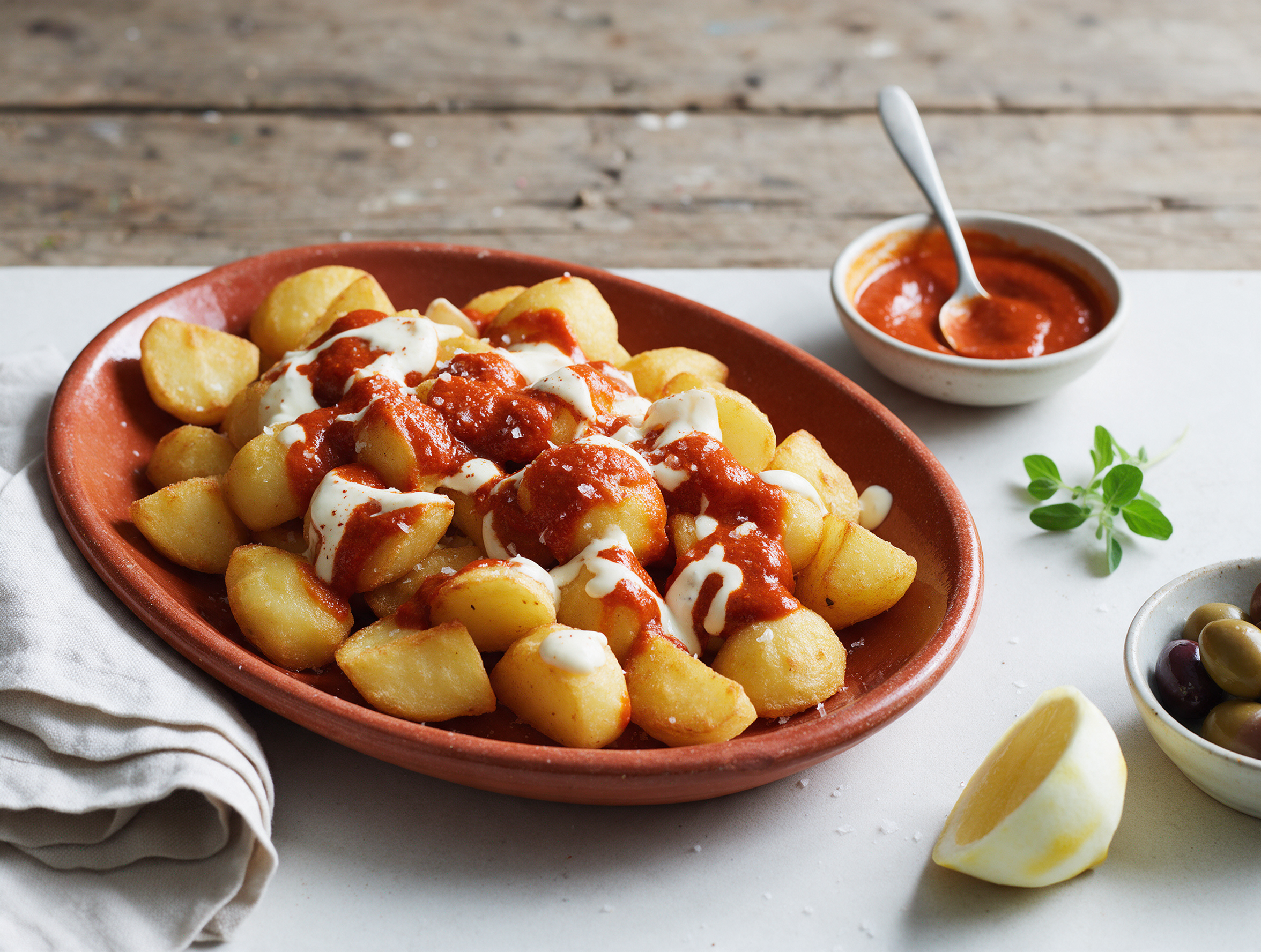
Spanish patatas bravas are chunks of fried potato served with a smoky, mildly spicy paprika sauce, and they’re a fixture on tapas menus across Spain. The name comes from brava, meaning fierce, which usually refers to the heat in the sauce.
No single sauce is the official one. Bars guard their own versions, and some top the potatoes with garlicky alioli or serve it alongside. This version uses a flour-thickened sauce built on pimentón (Spanish smoked paprika) and a little tomato paste, with a quick alioli as an option.
The potatoes are boiled briefly, steamed dry for 10 minutes, then fried in two batches at 350 F / 175 C. That dry, slightly roughed-up surface is what turns crackly in the oil.
Why You’ll Love This Recipe
- Crackly outside and fluffy inside, thanks to parboiling first
- Sauce built from pantry staples: paprika, tomato paste, stock
- Heat level shifts with one teaspoon of hot paprika
- Easy to double for a full tapas spread
Ingredient Notes
- Yukon Gold potatoes: They hold their shape during boiling and still fry up fluffy inside. Russets work but break at the edges, which gives more crunch and a few ragged pieces.
- Pimentón (Spanish smoked paprika): Look for pimentón de la Vera, sold as dulce (sweet) and picante (hot). Regular smoked paprika works. Plain sweet paprika changes the flavor noticeably and isn’t traditional.
- Sherry vinegar: It adds a nutty acidity that suits the smoke in the sauce. Red wine vinegar is the closest substitute.
- Sunflower oil: A neutral oil lets the paprika stay in front. Light olive oil also works, but extra-virgin olive oil is too strong and smokes sooner at this temperature.
- Mayonnaise (for the quick alioli): Traditional alioli is a garlic and olive oil emulsion without egg. Mayonnaise with grated garlic is a shortcut that changes the texture and makes it a looser stand-in.
Spanish Fried Patatas Bravas with Smoky Paprika Sauce
Ingredients
Method
- Put the potatoes in a 5-quart / 4.7 L pot, cover with cold water by 1 inch / 2.5 cm, and add 1 tbsp kosher salt. Bring to a boil, then simmer for 6 to 8 minutes, until the edges look slightly fuzzy and a knife slides in with some resistance at the center.
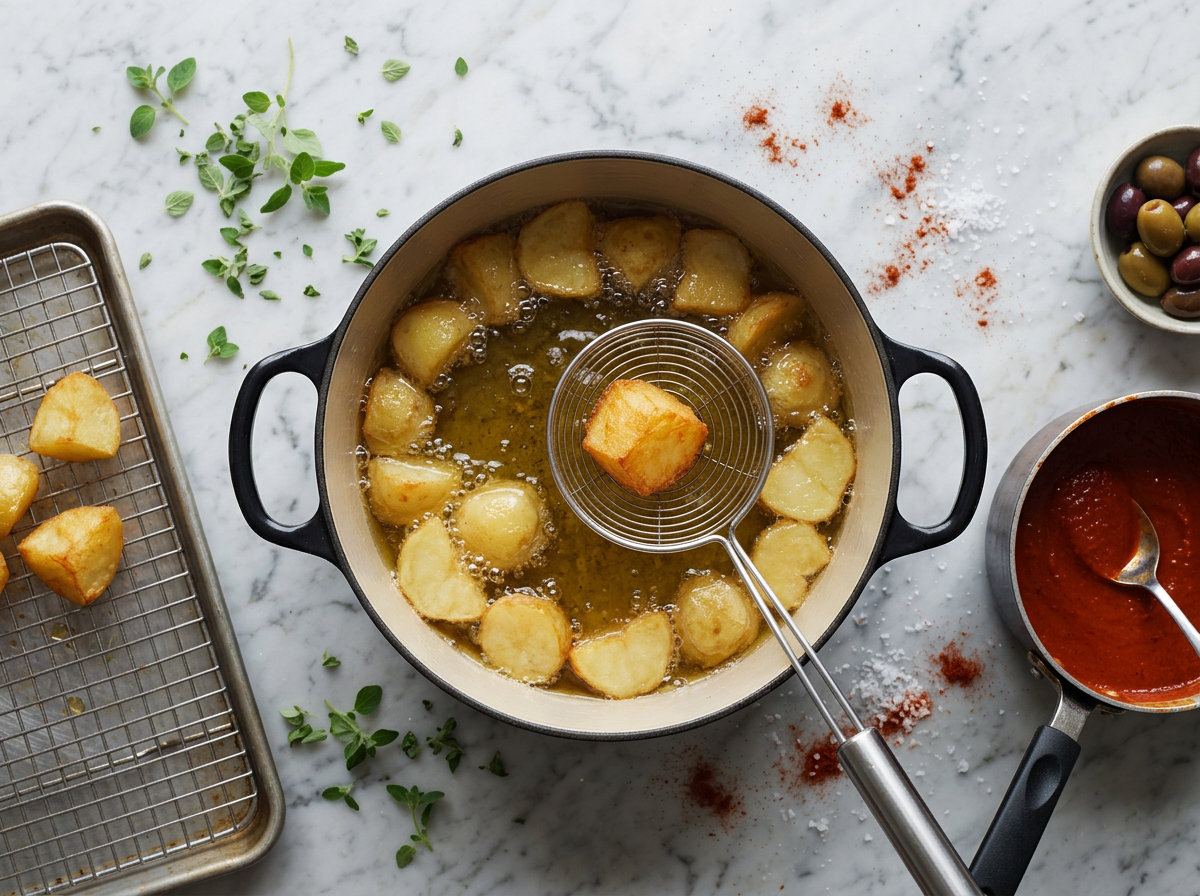
- Drain gently and spread the potatoes in a single layer on a wire rack set over a 33 x 46 cm / 13 x 18 inch sheet pan. Let them steam-dry for 10 minutes, until the surface looks matte and dry.
- While the potatoes dry, heat the olive oil in a 2-quart / 1.9 L saucepan over medium-low heat. Cook the garlic for 30 to 60 seconds until fragrant but not browned, then stir in the flour for 1 minute. Pull the pan off the heat, stir in both paprikas and the tomato paste, and return it to the heat. Pimentón scorches in seconds, so if it smells acrid or turns dark brown, start over.
- Whisk in the stock a little at a time, then add the sherry vinegar and 1/2 tsp salt. Simmer gently for 8 minutes, until the sauce coats the back of a spoon. For the optional alioli, stir the mayonnaise, grated garlic, and lemon juice together in a small bowl.
- Pour the sunflower oil into a 24 cm / 9.5-inch Dutch oven, about 1.5 inches / 4 cm deep, and heat to 350 F / 175 C. Fry half the potatoes (about 450 g) for 7 to 8 minutes, turning now and then, until deep golden and crisp. Lift them onto the wire rack with a spider skimmer and sprinkle with half the flaky salt.
- Let the oil return to 350 F / 175 C, then fry the second batch the same way and salt it while hot.
- Pile the potatoes on a platter or in a shallow dish, spoon the warm sauce over the top, and drizzle with the alioli. Serve within 10 minutes of frying.
Notes
- Steam-dry the parboiled potatoes for the full 10 minutes before frying.
- Fry in two batches and bring the oil back to 350 F / 175 C between them.
- Add the paprika off the heat so it doesn't scorch.
- Spoon the warm sauce over the potatoes just before serving to keep the crust crisp.
Tips for Success
- Choose Yukon Gold or another all-purpose potato, since it holds its shape in the pot and still fries up fluffy inside.
- Cut the potatoes into even 1-inch / 2.5 cm chunks so every piece finishes boiling and frying at the same time.
- Take the saucepan off the heat before adding the paprika, because pimentón scorches in seconds and turns the whole sauce bitter.
- Clip a thermometer to the Dutch oven and hold the oil at 350 F / 175 C, since guessing leads to greasy potatoes.
- Salt the potatoes the moment they leave the oil, while the surface is still slick enough to hold the crystals.
Variations
- Make patatas alioli style: skip the red sauce and double the alioli with an extra grated garlic clove and a squeeze of lemon.
- Roast instead of fry, which is not traditional: toss parboiled potatoes with 3 tbsp olive oil and roast at 425 F / 220 C for 35 to 40 minutes.
- Turn up the heat by using 2 tsp hot paprika and adding 1/4 tsp cayenne, or leave out the picante entirely for a mild sauce.
Storage and Reheating
Patatas bravas are best made fresh. The crust softens within about 10 minutes of frying, so fry only what you plan to serve and keep the extras raw or parboiled.
The components can be made ahead instead. Parboil the potatoes up to 1 day in advance, cool them, and refrigerate them in a single layer in a loosely covered container, then fry just before serving.
The sauce keeps in an airtight container in the refrigerator for 4 days, or in the freezer for up to 2 months. Warm it in a saucepan over low heat, adding a splash of water if it has thickened, and whisk if it separates slightly after thawing.
Serving Suggestions
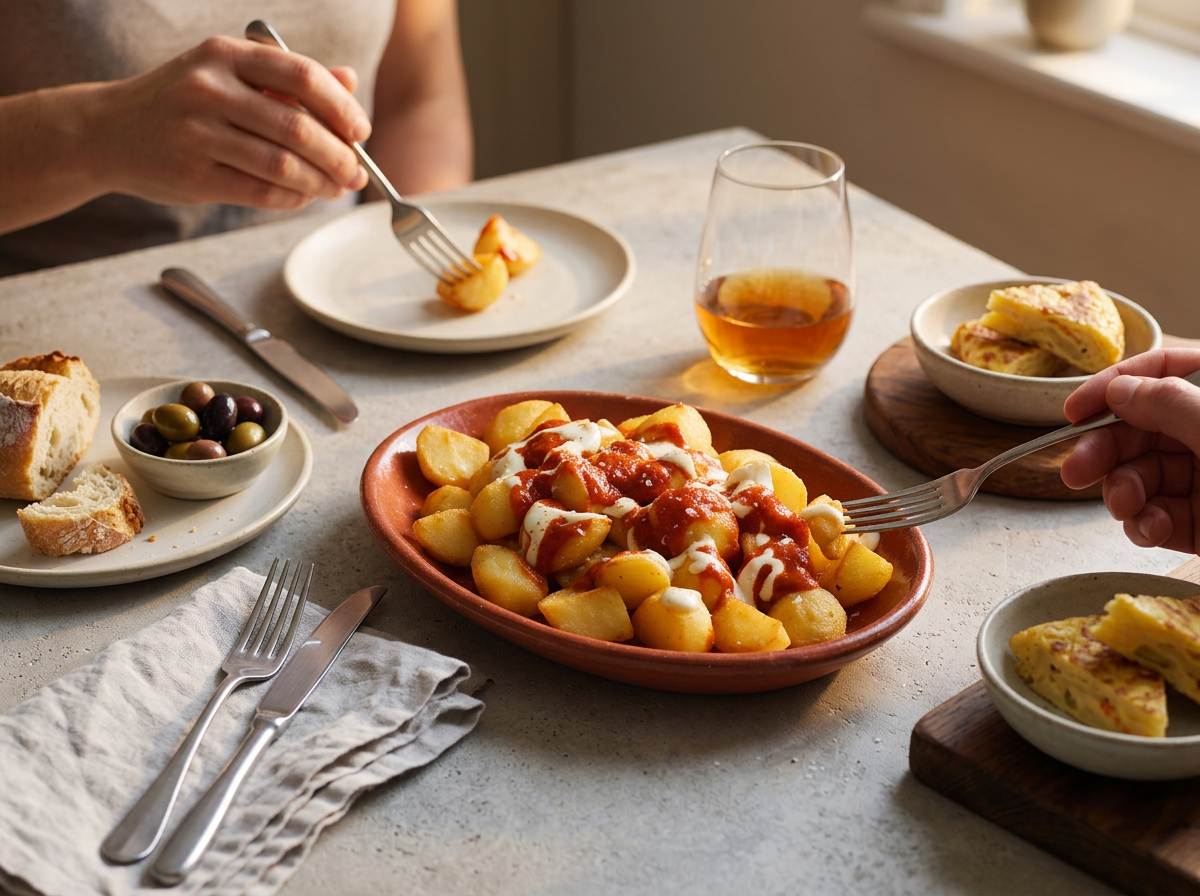
Pile the potatoes into a shallow dish, pour the warm sauce over the top, and drizzle with alioli. Serve within 10 minutes of frying, while the crust is still crisp. If you’d rather keep the potatoes crunchier, serve the sauce in a small bowl on the side.
Patatas bravas fit naturally into a tapas spread alongside tortilla española, pan con tomate, gambas al ajillo, and croquetas. Olives, a few slices of Manchego, and some jamón round out the table.
For drinks, a cold caña (small draft beer), a glass of dry fino sherry, or vermouth over ice all stand up to the smoky heat of the sauce.
FAQ
Why are my patatas bravas soggy instead of crisp?
Soggy bravas usually mean the potatoes were damp or the oil was too cool. Steam-dry the parboiled chunks for a full 10 minutes and hold the oil at 350 F / 175 C. Fry in two batches, since 900 g at once drops the oil temperature, and add the sauce only just before serving.
Can I use regular paprika instead of pimentón for bravas sauce?
You can, but the sauce loses the smoke that defines bravas. Look for pimentón de la Vera or any smoked Spanish paprika, and use plain sweet paprika only if you can’t find it, knowing the result tastes flatter and isn’t traditional. If you don’t have hot paprika, use 1/4 tsp cayenne.
Can I make the bravas sauce ahead and fry the potatoes later?
Yes. The sauce keeps in the refrigerator for 4 days and freezes for up to 2 months, and the potatoes can be parboiled a day ahead and refrigerated in a single layer. Fry the potatoes just before serving, because the crust softens within about 10 minutes. Warm the sauce over low heat, adding a splash of water if it has thickened.
What goes well with patatas bravas on a tapas table?
Tortilla española, pan con tomate, gambas al ajillo, and croquetas share the table well, since none of them compete with the smoky sauce. Add olives and a few slices of Manchego or jamón. For drinks, a cold caña, dry fino sherry, or vermouth over ice all work.
Are patatas bravas gluten free, and can I make them vegan?
Not as written. The sauce is thickened with 1 tbsp flour, and the alioli uses mayonnaise, which contains egg. Swap the flour for 2 tsp cornstarch whisked into the stock, use vegetable stock, and skip the alioli or use a vegan mayonnaise. Check the stock label for gluten.
What is the difference between patatas bravas and patatas alioli?
Bravas use a red paprika sauce with some heat, and patatas alioli use a garlic emulsion with no chile. Plenty of bars serve both sauces on one plate, which is why this recipe includes an optional alioli. Sauces vary from bar to bar, so treat both as styles rather than fixed recipes.
